Custom vs. Ready-Made Software: Which Is Right for Your
Business?
Mahedi Hasan
August 19,
2026
Custom vs. Ready-Made Software: Which
Is Right for Your Business?
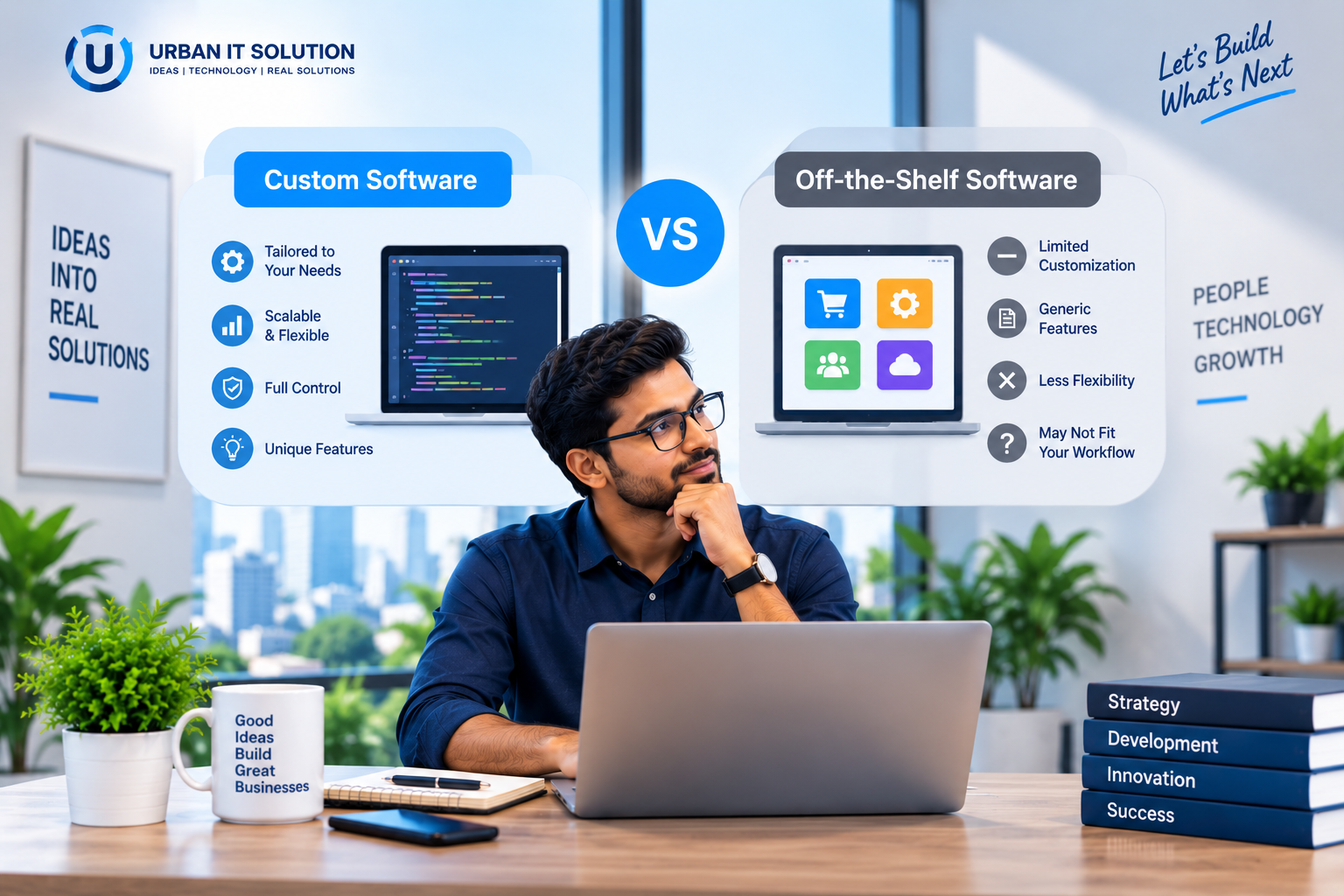
Every business has its own processes, challenges, and goals. While ready-made software can be
useful for common requirements, custom software gives businesses greater flexibility and
control. In this article, we explore the key differences between custom and off-the-shelf
solutions and when investing in custom software makes sense.
What Is Ready-Made Software?
Ready-made software, also known as off-the-shelf software, is developed for a broad range of
businesses and users. These solutions typically provide standard features that address
common business needs.
Examples include accounting platforms, project management tools, CRM systems, communication
platforms, and inventory management software.
h6>What Is Custom Software?
Custom software is designed and developed specifically for a particular business,
organization, or business process. Instead of adapting your operations to an existing
product, the software is built around your requirements.
For example, a company may need a customized ERP system, customer portal, inventory
platform, booking system, HR management solution, or business dashboard that integrates
several existing systems.
When Should You Choose Ready-Made Software?
Ready-made software can be a good option when your business has standard requirements and
does not need extensive customization.
Consider an off-the-shelf solution when:
Your requirements are common across many businesses.
You need software quickly.
Your budget is limited.
You do not require complex integrations.
The software already provides most of the features you need.
You prefer a subscription-based solution with vendor-managed updates.
For many small businesses and startups, ready-made software can be an efficient way to start
without making a large technology investment.
When Should You Choose Custom Software?
Custom software becomes more valuable when your business has unique processes or requires
functionality that existing solutions cannot provide.
You may want to consider custom development when:
Your business has specific requirements that cannot be met by off-the-shelf software.
You need to integrate multiple systems or data sources.
You require advanced automation or specialized workflows.
Your business is growing and needs a scalable solution.
You want greater control over data security and user access.
You want a platform that can evolve with your organization.
In these cases, custom software can provide a competitive advantage by enabling your business
The goal is not simply to build software with more features. The goal is to build software
that solves the right business problems.